9 titles · in the order the archive depicts them. A series counts once, regardless of however many of its episodes carry the tag. 5 titles here come through the places inside this one rather than its own tag, and are counted only because they are set inside these boundaries.
The Chronicle
The events and themes the archive follows through Soviet Union, in the order they happened, each with the titles that depict it. Press a name to read about it in the threads below.
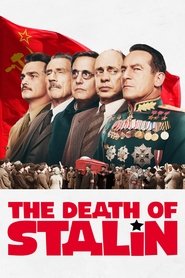
The death of the Soviet Union's longtime General Secretary and dictator, Joseph Stalin, represented a major power vacuum in Soviet politics that would cause more than a few…
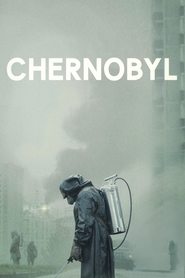
The explosion of reactor 4 on April 1986 at the Chernobyl Nuclear Power Plant in Pripyat, in what is now modern-day Ukraine, that resulted in a massive release of radioactive…
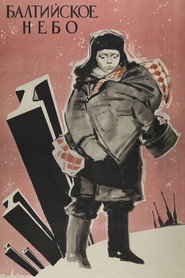
2 of these were made while Soviet Union was still going on: Baltic Skies (1960), Come and See (1985).
FilmsSeries
Cast of Characters
The historical people the archive’s titles put on screen in this period, grouped by what they are known for. The number is how many titles set here they appear in; a long group leads with those set here most often, then those the archive puts on screen most, and opens to show everyone.
A thread follows one event or historical theme across the archive, wherever and whenever it appears. Pick a tab to read one; they are in the order they are filed on the timeline. Pulling a thread opens up a narrowed timeline view filtered to every year that thread touches.
The German codename for the surprise invasion of the Soviet Union in June 1941. Pulling together nearly four million combined Axis troops for the attack, Barbarossa opened the Eastern Front of World War II, dissolving the Soviet-German partnership and cementing the Soviet Union as a part of the Allies for the duration of the war, as well as beginning the deadliest land-based military conflict in history.
The systematic extermination of Jewish people across Europe as perpetuated by Nazi Germany and its allies during World War II. The genocide was conducted in various stages and by various means over the course of the war, though none more identifiable with the atrocity than the death camps such as Auschwitz-Birkenau, Belzec, Treblinka, and Sobibor. In all, some six million Jews would perish from 1941-1945.
The largest tank battle in history, fought between the armies of the Soviet Union and Nazi Germany around the town of Kursk in mid-1943. Involving over two million total combatants, the battle marked a key turning point in the Eastern Front campaign after which point Axis forces would never again be able to mount a serious offensive into the Soviet Union.
The death of the Soviet Union's longtime General Secretary and dictator, Joseph Stalin, represented a major power vacuum in Soviet politics that would cause more than a few changes in the state's political scene, including, ultimately, a relative relaxation in political repression. With no clear heir or mechanism for selecting a successor, several parties vied for control, lead among them including Georgy Malenkov, Lavrentiy Beria, and Nikita Khrushchev.
The explosion of reactor 4 on April 1986 at the Chernobyl Nuclear Power Plant in Pripyat, in what is now modern-day Ukraine, that resulted in a massive release of radioactive material and an intensive ensuing cleanup operation.
Every place the archive’s titles set in this realm name, with each one nested under the larger place it sits inside where that place is here too. The number is how many titles set here name it.
No title set here has been given a saltiness score yet. That is unrated, which is not the same as accurate.
Archive Density
4%4 of the 114 titles the archive sets between 1922 and 1991 are tagged Soviet Union itself.
8%With the places inside it: 9 of the same 114 titles are tagged Soviet Union or a place inside it.
This measure can help illustrate cinematic hotspots within a time period by comparing which years of the overarching, actual historical time period are backed up by a cinematic release.
19221991
Each bar is 2 years, as tall as the number of titles the archive sets in them (a title filed in two of them counts twice): the tallest 41 titles. In black, the titles directly tagged to it; in red, those tagged to a place inside it; hatched, those set elsewhere during the same years. Press a bar to open its years on the timeline.
69 years on the timeline fall inside the boundaries, 2 of them with nothing set there yet.
Share of the 22 genre taggings across 9 titles set in this period. A title filed under three genres is in three of these slices, so this is a share of taggings rather than of titles.
Films only. Co-directors are counted individually, so a director’s solo work and their collaborations are grouped together. Average saltiness ignores any title still unsalted.
Series only, counted once each however many episodes carry the period. Average saltiness ignores any title still unsalted.
Also on the Timeline
Periods overlap freely so concurrent means the two spans share years, and the shared stretch is named. Bounded means it lies wholly inside this one, beginning and ending more than 10 years within its boundaries. Before and after are the nearest periods lying outside this one, with the gap in years shown instead. A shared thread is what the two have in common besides the calendar, and a period lying wholly outside this one can still share one.
Periods before, during, inside and after Soviet Union, with their year ranges, the years they share with it, the threads they share with it, and how many titles the archive holds of each.